
Laser Cleaning In Auto Industry
Laser cleaning is a new “green” technology that will replace traditional cleaning methods in the future. It is a new type of industrial cleaning process with no pollution and no consumables. With its micron-level process precision and the integrated advantages of unmanned automation, it has been widely used in the production of various parts such as automotive power battery systems, transmission bearings, axles, wheels and tires. Recently, JNCT Laser Technology Co., Ltd. has successfully applied this technology in the preparation process of automotive friction materials.
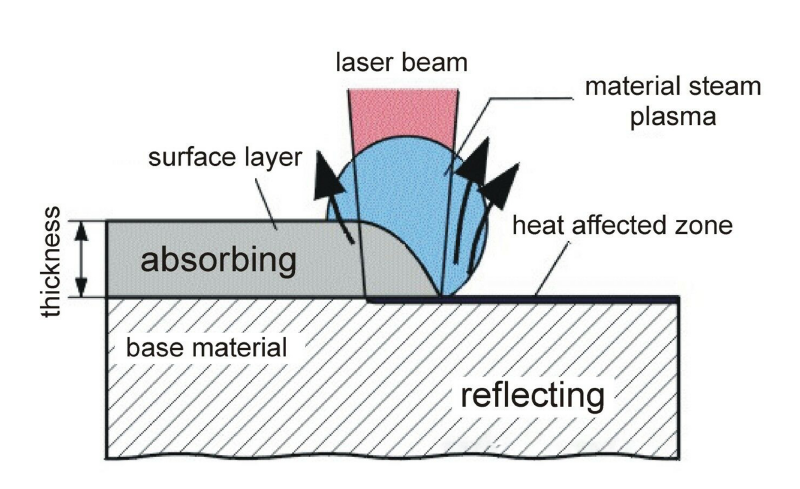
Principle of laser cleaning
The principles of laser cleaning can be roughly divided into three types: thermal effect, light stripping and oscillation. It uses different types of lasers to generate various laser beams, and uses the difference in the absorption coefficient of a certain wavelength of laser energy between the substrate and the surface contaminants to make the substrate material and the surface contaminants absorb energy to produce thermal expansion and separation. The instantaneous high temperature causes the dirt to evaporate, gasify or decompose instantly, and at the same time, ultrasonic waves are generated on the solid surface, generating mechanical resonance to vibrate and break the dirt layer or condensate. Schematic diagram of laser cleaning principle Compared with traditional industrial cleaning methods such as sandblasting or shot blasting, the biggest feature of laser cleaning is non-abrasive and non-contact. It has no thermal effect, will not produce mechanical force on the object being cleaned, will not damage the surface of the object, will not damage the substrate, and will not produce secondary pollution. It is a green and environmentally friendly cleaning method without consumables.
Laser cleaning equipment for the friction industry
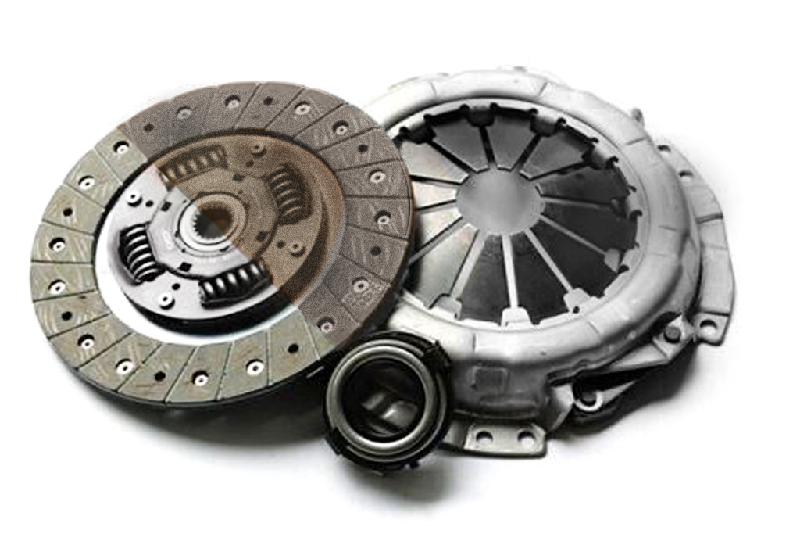
After a long period of use, the parts of a car will accumulate some dust, rust, oil, etc. If the car parts are too dirty, the filtering and cleaning effect will be poor, too many impurities will enter the oil circuit cylinder, aggravate the wear of the parts, and increase the possibility of failure. For the safe operation of the car, the car wheel hub, brake pads, brake discs, engine hoods, etc., as important parts of the car, need to be regularly inspected and repaired. Ensuring the cleanliness of various workpieces and parts is an indispensable task during the inspection and maintenance process. The friction material laser cleaning equipment developed by JNCT LASER can clean various types of drum and disc brake pads (shoes) and clutch assemblies, train synthetic brake shoes and other major friction materials, and also has good performance for specific sealing materials such as ceramic sheets and metal gaskets. The cleaning width is one meter, and multiple samples can be cleaned at the same time; the speed is adjustable, which can adapt to the speed of the production line, shorten the production process, and reduce working hours; only electricity needs to be connected during the production process, and no other consumables are required. It can replace the original cleaning processes of the enterprise such as sandblasting or steel brushing machines. At present, some major domestic automobile brake pad manufacturers have adopted JNCT laser customization equipment to improve production efficiency and stability.
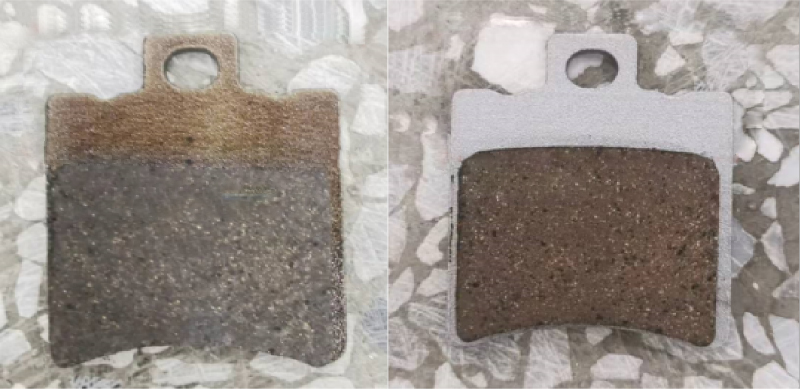

In the production process of brake pads, after flat grinding and before plastic spraying, the surface pads need to be cleaned. The output is large, the range is wide, and it is typical. Therefore, we take the cleaning application of brake pads as an example to compare the advantages and disadvantages of steel brush, sandblasting and laser cleaning:
- Cleaning efficiency: The steel brush equipment cannot clean the residual glue on the surface after flat grinding when cleaning the brake pads, causing pitting in the next plastic spraying process, and the effect is unsatisfactory. Both sandblasting equipment and laser cleaning can completely clean the surface residue after the flat grinding process. The cleaning speed of sandblasting is faster than that of laser cleaning, but if the production time of the complete production line such as flat grinding before the oven and the curing process after plastic spraying is considered, the cleaning speed of sandblasting is redundant. Although laser cleaning is slower, it can also adapt to the production line speed.
- Energy consumption: The energy consumption of the steel brush machine is about 8KW/H, ranking second among the three. The sandblasting process has the highest energy consumption, with a total energy consumption of up to 70KW/H. This is because although the energy consumption of the three motors of the sandblasting machine itself, sandblasting, walking, and swinging, is about 15KW/H, the air compressor for air supply consumes up to 55KW per hour, so it is considered a large energy consumer. The total energy consumption of our laser cleaning equipment is only 7KW/H, which is one-tenth of the sandblasting equipment, and the energy consumption is the lowest among the three.
- Economic and environmental protection: In terms of economic applicability, sandblasting equipment consumes 5KG of quartz sand as consumables per hour. The longer the use time, the more consumables are required. With the gradual improvement of national environmental protection requirements, some local governments have listed sand washing machines as non-compliant types of environmental protection. Steel brush equipment and laser cleaning only need to be connected to electricity. Laser cleaning can save 1-2 labor compared to sandblasting and steel brushes because of automated operation; from the perspective of environmental protection and low carbon, laser cleaning has no consumables, no emissions, low energy consumption and no noise, and is also the most low-carbon and environmentally friendly equipment among the three.
ABOUT TIPTOP LASER COMPANY
As a national high-tech enterprise specializing in the research and development of laser cleaning technology and the vice president unit of the Shenzhen Laser Intelligent Manufacturing Industry Association, TIPTOP LASER’s core R&D team is composed of doctors and postdoctoral fellows from many well-known universities at home and abroad, such as ALT Laser in the UK, the University of Liverpool, the University of Manchester, and Harbin Institute of Technology. It has more than 40 special patents for laser cleaning. The equipment has been successively used in advanced scientific research institutes such as Harbin Institute of Technology, Guangxi University, the Institute of Modern Physics of the Chinese Academy of Sciences, Giti Tire, ZF Friedrichshafen, China Aerospace, CRRC, China XD and other well-known domestic and foreign companies. The product has won the laser industry awards for three consecutive years: “2021 Hongguang Award-China Laser Equipment Innovation Contribution Award”, “2022 Veken Cup Laser Industry-Advanced Application Case Award” and “2023 China Laser Golden Award New Application Award”.