
Customized Seal Mould Industry Cleaning
Professional Mould laser cleaning machine application in seal industry.
1. Principle of laser cleaning
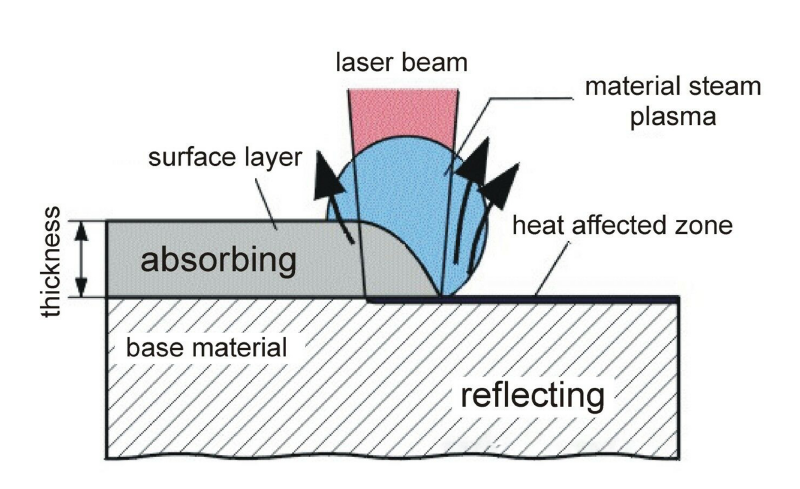
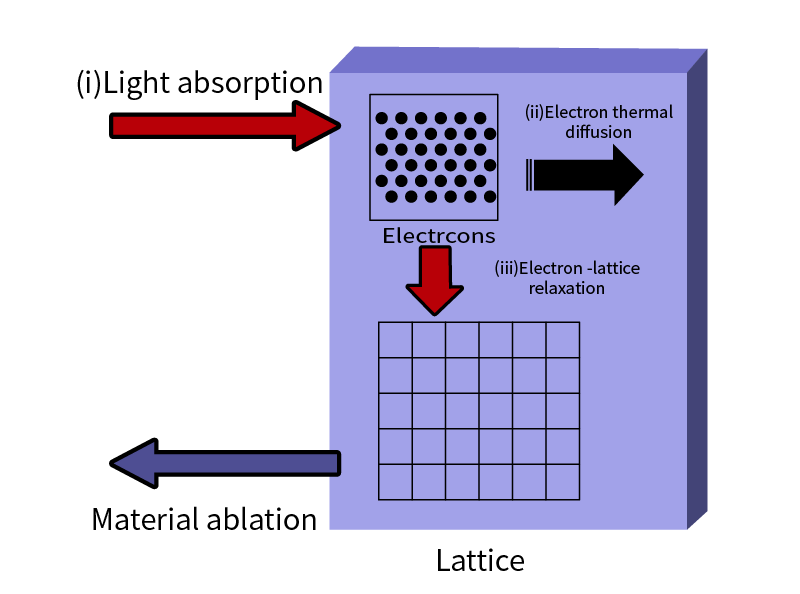
The principles of laser cleaning can be roughly divided into three types: thermal effect, light stripping and oscillation. It uses different types of lasers to generate various laser beams, and uses the difference in the absorption coefficient of a certain wavelength of laser energy between the substrate and the surface contaminants to make the substrate material and the surface contaminants absorb energy to produce thermal expansion and separation. The instantaneous high temperature causes the dirt to evaporate, gasify or decompose instantly, and at the same time, ultrasonic waves are generated on the solid surface, generating mechanical resonance to vibrate and break the dirt layer or condensate. Schematic diagram of laser cleaning principle Compared with traditional industrial cleaning methods such as sandblasting or shot blasting, the biggest feature of laser cleaning is non-abrasive and non-contact. It has no thermal effect, will not produce mechanical force on the object being cleaned, will not damage the surface of the object, will not damage the substrate, and will not produce secondary pollution. It is a green and environmentally friendly cleaning method without consumables.
Laser cleaning equipment for the sealing industry
The main applications of laser cleaning in the sealing industry include the removal of oil stains on the surface of stainless steel strips during the production of metal gaskets, the cleaning of oil stains and residual glue on the surface of sealing ring molds, and the surface modification of special sealing materials. There are many types of seals, typically O-rings or skeleton oil seals and sealing gaskets. Through the irradiation of the laser beam, the oil stains on the sealing gasket evaporate instantly and peel off from the metal to achieve the cleaning effect.
The oil film attached to the surface of the stainless steel coil needs to be cleaned before the metal wound gasket enters the winding machine. The existing process generally uses chemical immersion for surface treatment. The cleaning effect of laser cleaning in this process can meet the needs of manufacturers. The difficulty of application lies mainly in the two problems of bandwidth and production line speed that cannot be adapted. Generally, the width of laser cleaning equipment is between 150-200mm, while the width of stainless steel strips is between 1100-1500mm; and the production rhythm of steel coil cleaning is too fast, generally above 10M/min, which is about ten times higher than the adaptation speed of laser cleaning. Our company can solve the cleaning width adaptation problem through the ultra-wide laser cleaning equipment independently developed by us. Although the production line speed problem can be solved in terms of process application, the current industry solutions are too expensive and need further optimization.
Oil seal mould cleaning equipment
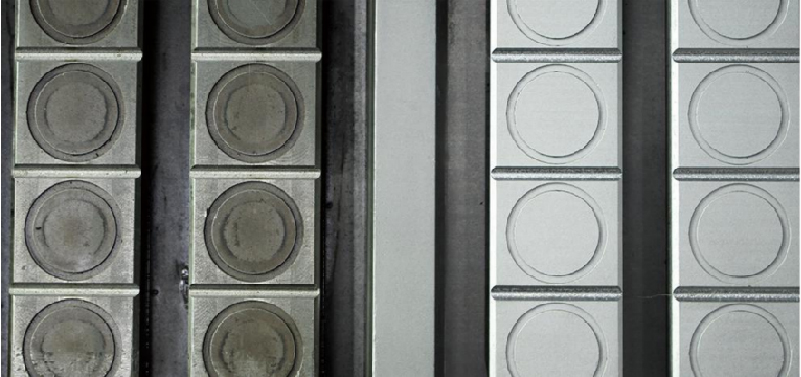
For cleaning the oil and residual glue on the surface of the sealing ring mold, we have developed a flat mold laser cleaning equipment with three-dimensional five-axis motion and high degree of freedom. It is suitable for various flat molds such as brake pad molds in the friction industry and sealing ring molds in the sealing industry. It can remove anti-rust oil and clean the surface residue of the cavity after multiple compression molding. Positioners can be added to adapt to complex molds. The electroplating layer can be retained during the cleaning process to protect the knife edge texture and extend the life of the mold. Compared with sandblasting cleaning, it is not only more environmentally friendly, but also can ensure that the cavity is not damaged and reduce the defective rate of products.

None metal gasket cleaning
Non-metallic sealing gaskets are another major category in the sealing industry. This type of product has a strong absorption rate for fiber lasers in the band of 1064-1080nm, which will cause damage under normal circumstances and is not suitable for process applications (for example, when pulsed laser acts on the surface of rubber materials, it will cause damage of about 10μm). However, it can be used as a modification method for a few special materials, such as rubber materials with polymethylhydrogensiloxane attached. While removing the coating, it can increase the surface friction coefficient to 35mN/m and the surface tension to more than 38dyne/cm.
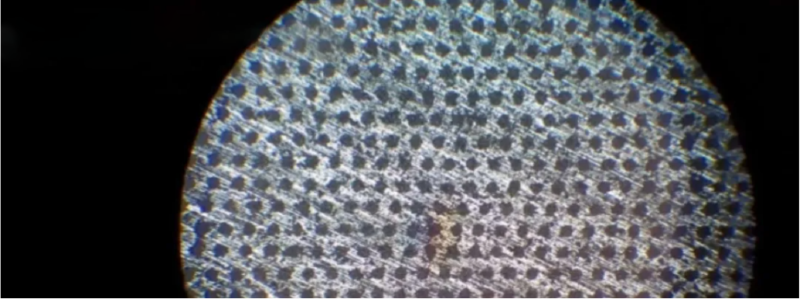
At the same time, laser cleaning has good performance in the cleaning and dot roughening of oxide layers of ceramic and composite sealing parts, and has satisfactory results in removing sealants on metal surfaces. It can be seen that laser cleaning will have different performances in the application of products of different materials due to different laser absorption rates, so it can also be used as a supplementary process for surface modification of a few special sealing materials.
TIPTOP Laser Company
As a national high-tech enterprise specializing in the research and development of laser cleaning technology and the vice president unit of the Shenzhen Laser Intelligent Manufacturing Industry Association, TIPTOP LASER’s core R&D team is composed of doctors and postdoctoral fellows from many well-known universities at home and abroad, such as ALT Laser in the UK, the University of Liverpool, the University of Manchester, and Harbin Institute of Technology. It has more than 40 special patents for laser cleaning. The equipment has been successively used in advanced scientific research institutes such as Harbin Institute of Technology, Guangxi University, the Institute of Modern Physics of the Chinese Academy of Sciences, Giti Tire, ZF Friedrichshafen, China Aerospace, CRRC, China XD and other well-known domestic and foreign companies. The product has won the laser industry awards for three consecutive years: “2021 Hongguang Award-China Laser Equipment Innovation Contribution Award”, “2022 Veken Cup Laser Industry-Advanced Application Case Award” and “2023 China Laser Golden Award New Application Award”.